This RS232 - RS485 / RS422 converter is port powered from the RS232 port and at the same time it has LED indication lights which will show when data is present on the TX or RX lines. It will also show when the converter has sufficient power from the RS232 port.
Most port powered RS232 to RS485 converters does not have these indication lights, however for troubleshooting or simply just to check if data is flowing, these lights are very convenient.
Some RS232 ports does not provide sufficient power, in which case this converter can be powered by an external power source through the screw terminals.
Unlike USB to serial adapters, RS232 to RS485 / RS422 converters has a very short data delay time, so it will work with most devices and equipment, such as CNC machines, printers, scales, monitors, camera systems, security systems and most other industrial and commercial devices.
The built-in auto-sense circuitry automatically selects RS485 or RS422 mode depending on the connected signal, no jumpers or other settings are needed.
Overall features
- Port-powered RS232 to RS485 / RS422 converter
- LED indication lights for TX, RX and power
- No external power supply required
- Optional external power supply
- Fail-safe bias resistors
- RS485 / RS422 Auto-sense, no jumpers needed
- Plug and play, no drivers needed
- Static and surge protected converter
- Automatic Send Data Control
- Asynchronous, half-duplex and full duplex
|
| SPECIFICATIONS |
| Model number |
XS202ELED |
| Baud rate |
300 - 115200bps |
| Power |
Port-powered from RS232 (RTS, DTR, TXD).
Optional external power: 5.0VDC |
| Current consumption |
less than 10mA |
| Interface RS-232 |
DB9 female connector. Pin 7 (RTS) and 8 (CTS) are tied together.
Pin 4 (DTR), 6 (DSR), and 1 (CD) are tied together. |
| Interface RS422 |
DB9 male and terminal board |
| Working mode |
4-wire RS422 asynchronous, full-duplex differential and half-duplex RS485 |
| Standards |
EIA/TIA RS-232C / RS-422 / RS485 |
| Transmission distance |
RS232: Typical: 15 FT (5m)
RS422: Typical: 4000 FT (1200m) |
| ESD protection |
1500W / 600W/ms |
| Screw terminals wire gauge |
Max. 16 AWG |
| Operating Temp. |
-13°F to 158°F (-25°C to 70°C) |
| Operating humidity |
5% To 95% - No Condensation |
| Dimensions |
60 mm x 40 mm x 20 mm |
| Compliance |
CE, FCC, RoHS, ISO 9001 |
| Warranty |
1-year Limited Warranty |
Useful optional accessories (not included)
Top RS232 to RS422 Converter: Reliable Industrial Solutions Explained
An RS232 to RS422 converter is essential for extending communication distances and enhancing signal quality. While RS232 is limited in range and noise immunity, converting to RS422 mitigates these issues, providing more reliable data transmission for industrial and commercial applications.
Key Takeaways
-
RS232 to RS422 converters improve communication reliability by extending transmission distances up to 4000 feet and providing better noise immunity.
-
Choosing the right RS232 to RS422 converter involves assessing its features, environmental compatibility, and whether it is port-powered or externally powered.
-
These converters are crucial in various industries, including industrial automation and data communication systems, allowing seamless communication between devices with different signaling standards.
Understanding RS232 to RS422 Conversion
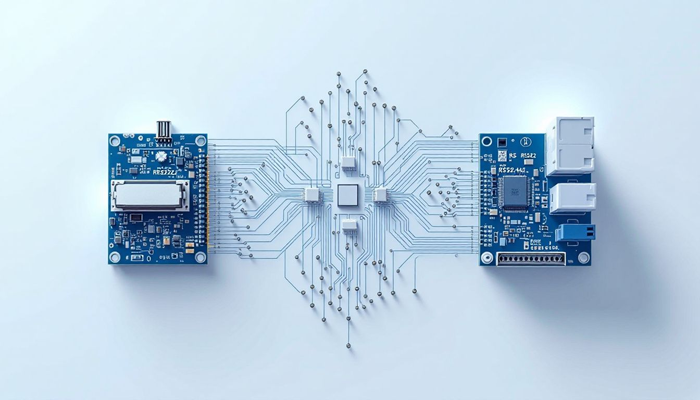
The conversion from RS232 to RS422 is a critical process in many industrial and data communication applications. RS232, once the dominant communication standard, is known for its asynchronous serial protocol and single-ended signals. However, it is limited in terms of signal quality, distance capabilities, and noise immunity, which is where rs 422 comes into play.
RS422 offers significant improvements over RS232, including longer transmission distances and better noise immunity. Converting RS232 to RS422 enhances communication system reliability and efficiency, making it suitable for more demanding applications.
RS232 Basics
RS232 communication operates with voltage levels ranging from -12 to +12 Volts, defining binary states by these voltage levels. The single-ended signaling and common ground used in RS232 make it more susceptible to electrical noise, which can degrade signal quality. Typically, RS232 communication is limited to a maximum distance of 50 feet, constrained further by noise interference and signal degradation.
Moreover, rs 232 allows only one device to connect per port, limiting its scalability in multi-device communication setups. In industrial settings where longer distances and noise reduction are critical, RS232 to RS422 converters come into play.
These converters can extend communication ranges up to 4000 feet while ensuring data integrity. These converters allow a master device to manage multiple slave devices, facilitating complex applications and improving data communication in robust environments.
RS422 Fundamentals
RS422 is designed to support longer transmission distances and higher data rates than RS232, making it ideal for more demanding applications. It enhances data communication systems by providing reliable connections capable of handling higher baud rates and extended distances.
The differential signaling used in RS422 offers improved noise immunity compared to RS232. RS422 uses separate pairs for transmitting and receiving data, minimizing electromagnetic interference and ensuring reliable communication.
Key Features of RS232 to RS422 Converters

Selecting the right RS232 to RS422 converter involves assessing specific features and compatibility with existing systems. These converters utilize the MAX491 chip and support 4-wire balanced full-duplex communication for efficient data transfer. When choosing a reliable RS422 converter, consider processor chips from reputable brands like Maxim or National Instruments for their stability and compatibility.
Factors such as environmental conditions, communication distance, and data rates play a crucial role in selecting the correct RS422 converter. Choosing a converter that meets your application's requirements will enhance the performance and reliability of your communication systems.
Transmission Rate and Data Rates
The transmission rates of RS232 to RS422 converters range from 300 to 115200 bps, accommodating various communication needs. They support transmission rates from 300 bps to 115200 bps for both point-to-point and point-to-multipoint setups. This flexibility ensures compatibility with multiple devices and applications, making them versatile solutions for different data communication requirements.
RS232 supports data rates up to 20 Kbps and typically has a maximum transmission distance of 15 meters. In contrast, RS232 to RS422 converters enhance signal integrity and reduce noise, which is critical for high-volume data transmission. Operating at various baud rates, typically ranging from 300 to 115.2K baud, these converters ensure compatibility with a wide range of devices.
Surge Protection and Reliability
RS232 to RS422 converters often come with surge protection capabilities, allowing them to withstand voltage spikes and enhance data transmission reliability. Many converters include built-in surge protection with capabilities up to 600W, making them suitable for harsh environments. Using twisted pair cables is essential for RS422 connections, as they help minimize external noise and improve signal integrity.
Running a signal ground across the RS422 converter is recommended for reliable operation, especially in electrically noisy environments. Checking both signal ground and protective grounding during testing can help troubleshoot connection issues and enhance overall reliability.
These converters provide reliable connections that mitigate noise and signal degradation over extended distances, enhancing the robustness of data communication systems.
Port Powered vs External Power
RS232 to RS422 converters can be either port-powered or externally powered, offering flexibility based on application needs. Port-powered converters draw power directly from RS232 signals, allowing for a more straightforward setup without the need for additional power sources. This option is convenient for applications with limited power requirements and where simplicity is a priority.
Externally powered models, on the other hand, operate on an external power source, enabling reliable operation even when the serial port power is insufficient. Choosing between port-powered and externally powered converters depends on specific application requirements, including energy consumption and setup convenience.
Choosing the Right RS422 Converter for Your Needs
Selecting the appropriate RS232 to RS422 converter is crucial for ensuring long-distance data transmission while maintaining signal integrity. These converters are essential in various industries, from industrial automation to telecommunications, where reliable and extended communication is a necessity. When choosing a converter, consider factors such as reliability, warranty terms, and customer support availability.
Evaluating aspects like product quality, customer support, and warranty options will help you make an informed decision. Consider suppliers that offer reliable warranties and excellent customer support to ensure your investment is protected and any issues can be promptly addressed.
Industrial vs Commercial Models
Industrial models of RS232 to RS422 converters are designed to endure harsh conditions, offering higher durability compared to commercial models. These industrial-grade converters can withstand heat and vibration, making them suitable for demanding environments. They cater to applications that require higher reliability and robustness, unlike commercial models that serve less demanding environments.
Commercial models, on the other hand, primarily focus on cost-effectiveness and are suitable for applications with less stringent requirements. Understanding the specific needs of your application will help you choose between industrial and commercial models effectively.
Software Drivers and Plug-and-Play Operation
Software drivers are usually not needed for RS422 converters. Rarely some types of RS232 to RS422 converter models may require specific software drivers to ensure compatibility and proper operation. These drivers must be compatible with the operating system to function correctly, facilitating seamless communication between devices.
Plug-and-play functionality significantly simplifies the installation process, enabling devices to automatically connect and operate without requiring extensive manual configuration. This feature allows RS422 converters to operate seamlessly across different operating systems, enhancing user convenience and reducing setup time.
Terminal Block and Twisted Pair Connections
Terminal block connections provide ease of wiring in industrial settings, making it simpler to connect devices to the RS232 to RS422 converter. Converters typically feature a DB-9 female connector on the RS232 side and a DB-9 male connector or a terminal block on the RS422 side for device connections. This configuration ensures secure and stable connections, essential for reliable data transmission.
Twisted pair connections further enhance signal quality by minimizing electromagnetic interference, crucial for maintaining communication integrity over long distances. Utilizing a DB-9 male or multi-way terminal block on the RS422 side provides flexibility in connecting various devices along the communication line, ensuring a robust communication setup.
Installation and Setup
Before starting the installation process, ensure that all necessary components are available and that all devices are powered off. This precaution helps prevent any potential damage during setup. The installation of an RS232 to RS422 converter generally begins with making the appropriate connections between the devices and the converter.
Proper installation and setup are crucial for ensuring reliable communication and data transmission. Following a systematic approach to installation will help avoid common pitfalls and enhance the overall performance of your communication systems.
Connecting Devices
Connecting devices correctly to the RS232 to RS422 converter is essential to ensure reliable communication. Use the appropriate pin configuration to avoid communication errors and enhance the reliability of your data transmission. The specific arrangement of pins that connect devices to the converter plays a critical role in the setup process.
Proper connection using the right pin configuration is crucial to prevent data transmission errors and ensure seamless communication between devices. Double-checking connections before powering on the devices can save time and prevent potential issues.
Configuring Software
Configuring the software correctly is vital for the effective operation of RS232 to RS422 converters. Ensure that the correct serial port settings, such as baud rate and parity, are configured in the software to facilitate successful communication. Properly configured settings allow for seamless communication between devices utilizing RS232 and RS422 protocols.
Approaching the configuration process systematically will help avoid communication errors and ensure reliable data transmission. Following the manufacturer's guidelines for software setup will enhance the overall performance of your communication systems.
Testing and Troubleshooting
To ensure a successful setup, verify that the RS232 cable length does not exceed 15.2 meters, while RS422 can reach up to 4000 feet. Performing a loop-back test by connecting the TX and RX terminals can help verify that the converter is functioning correctly.
Testing and troubleshooting are essential steps in the installation process. Systematically checking connections and configurations helps identify and resolve issues affecting communication reliability and performance.
Applications of RS232 to RS422 Converters
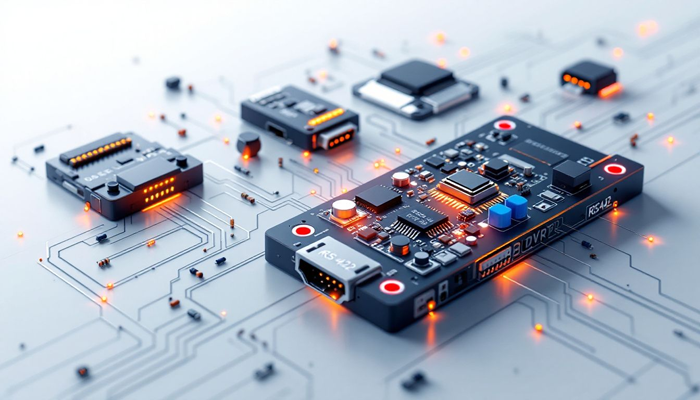
RS232 to RS422 converters are used in a wide range of applications to extend communication distances and improve data transmission reliability. These converters facilitate the connection of RS422 devices to computers with RS232 ports, ensuring efficient communication across various industries. With features like ESD protection and surge resistance, these converters are designed to offer reliable data communication solutions.
From industrial automation to military applications, RS232 to RS422 converters play a crucial role in enhancing communication reliability and extending reach. These converters are indispensable in modern technology setups, offering robust data communication solutions.
Industrial Automation
In industrial automation, RS232 to RS422 converters enable seamless communication between devices such as sensors, controllers, and actuators. These converters facilitate the integration of diverse machinery and control systems, allowing for smooth data exchange and enhancing operational efficiency.
RS422 supports longer transmission distances of up to 1,200 meters and higher data rates, reaching speeds up to 10 Mbit/s, making it more suitable for industrial environments. RS422 converters enhance the flexibility and scalability of industrial automation systems by supporting longer cable runs and multiple devices using unique addresses.
Data Communication Systems
RS232 to RS422 converters play a crucial role in modern data communication systems by allowing devices that use different signaling standards to communicate seamlessly. These converters are essential in applications where reliability and distance are key requirements, thus expanding the usability of RS232 devices in industrial systems.
In fields such as industrial automation, process control, and CCTV surveillance systems, RS232 to RS422 converters ensure robust data communication. Features such as surge protection significantly improve the reliability of data transmission in noisy environments.
Extending Distance in Communication Lines
RS232 to RS422 converters are designed to support longer distances compared to RS232, with improved noise immunity and data integrity during transmission. Utilizing twisted pair connections, these converters minimize electromagnetic interference, ideal for long-distance communication setups. Maintaining signal integrity is crucial when extending communication distances to ensure accurate data transmission.
Converting RS232 to RS422 extends communication lines up to 4000 feet, significantly surpassing the 50 feet limit of RS232. This capability is essential for applications that require reliable long-distance communication, ensuring data integrity and effective transmission.
Where to Buy RS232 to RS422 Converters
Finding reliable suppliers for RS232 to RS422 converters is crucial for ensuring quality and performance. Trusted suppliers often undergo rigorous testing and certification processes to maintain high standards in their products. They offer a wide range of converters to cater to various industrial needs, backed by excellent customer service and technical assistance.
Popular online marketplaces such as Amazon, eBay, and Alibaba provide a convenient platform for sourcing RS232 to RS422 converters and stock. These platforms offer competitive pricing but usually the quality of the products are very low and they also don't offer technical support. This is why we strongly recommend buying converters from a reputable US based business.
Trusted Suppliers
Trusted suppliers are known for their consistent quality and performance of RS232 to RS422 converters, ensuring reliable data transmission. Reputable suppliers often have a history of successful transactions and positive feedback from customers, which can be verified through third-party reviews and certifications. Excellent customer service, including support and technical assistance, sets trusted suppliers apart in the marketplace.
Ensuring that suppliers maintain an up-to-date inventory of converters that meet the latest industry standards is vital for purchasing suitable and reliable products. Responsive and knowledgeable customer service can significantly enhance the purchasing experience for consumers.
Summary
In summary, RS232 to RS422 converters play a vital role in extending communication distances, improving noise immunity, and maintaining data integrity across various applications. Understanding the fundamentals of RS232 and RS422, along with the key features of converters, helps in selecting the right converter for your needs. Industrial and commercial models offer different benefits, and the choice depends on the specific requirements of your application.
Proper installation, configuration, and testing are essential for ensuring reliable operation and performance. RS232 to RS422 converters are indispensable in industrial automation, data communication systems, and extending communication lines. By choosing trusted suppliers or reliable online marketplaces, you can ensure high-quality and performance for your converters.
Frequently Asked Questions
Is RS-422 2 wire or 4 wire?
RS-422 can be configured as either a 2-wire or a 4-wire connection, providing flexibility depending on the specific application needs. Thus, it can accommodate varying network setups effectively.
Why is RS232 to RS422 conversion important?
RS232 to RS422 conversion is essential for extending communication distances, enhancing noise immunity, and ensuring data integrity in numerous applications. This conversion allows for more reliable and effective communication in environments prone to electrical interference.
What are the key features to look for in an RS422 converter?
The key features to consider in an RS422 converter are transmission rates, surge protection, reliability, and the type of power source it utilizes—either port-powered or externally powered. These aspects ensure optimal performance and longevity of the device.
How do I choose between industrial and commercial models of converters?
To choose between industrial and commercial models of converters, consider the operational environment and durability requirements; industrial models provide higher durability for harsh conditions, while commercial models are more cost-effective for less demanding applications.



